The 4:6 method, the way we actually brew it
Tetsu Kasuya's competition recipe, adjusted for home kit — a pour-over you can dial sweeter or stronger without changing the grind.

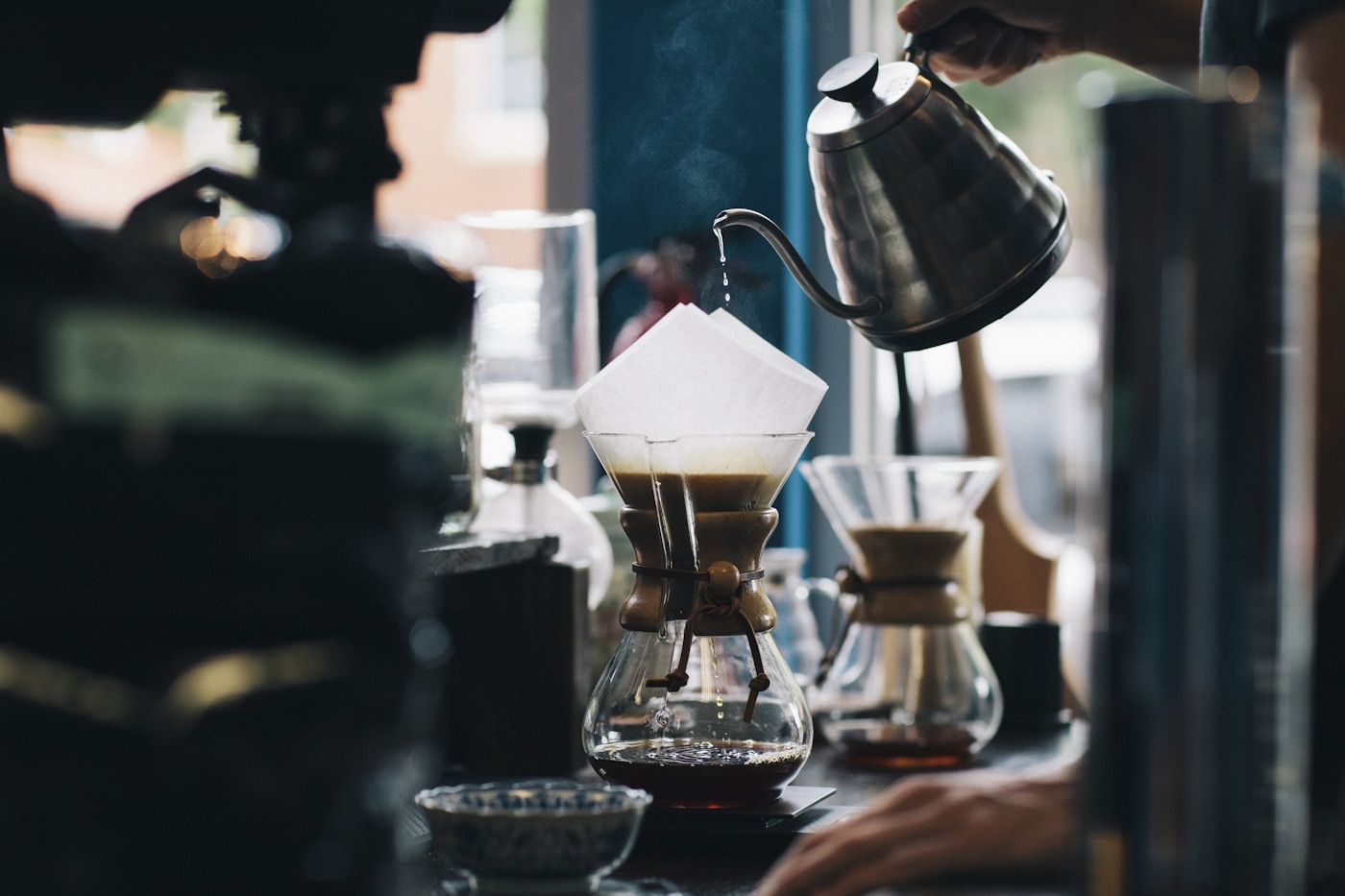
Most pour-over recipes ask you to change the grind to change the flavour. The 4:6 method, invented by World Brewers Cup champion Tetsu Kasuya, lets you change the taste just by changing how you pour. That's why it lives on our café training sheet — and why it's the first thing we teach anyone with a new dripper.
The name is the whole idea. You split your water into two parts: the first 40% controls sweetness and acidity, the last 60% controls strength. Five pours total, spaced about 45 seconds apart.
The recipe we use
- Coffee
- 20g, medium-coarse
- Water
- 300g, 92–94°C
- Ratio
- 1:15
- Total time
- 3:30
The first 40% — sweetness
Pour 60g, wait 45 seconds (this is your bloom). Then pour to 120g. More water in the first pour leans bright and lively; less leans round and sweet. With a fruit-forward coffee like the Guji, we keep the first pour smaller for sweetness.
The last 60% — strength
Now three even pours, each adding 60g, to 180g, 240g, and 300g. Three pours brews stronger; spread it into two and it's lighter. The bed should drain just as you finish the last pour.
Same beans, same grinder — and you can pour yourself a different cup tomorrow just by deciding to. — Priya, head roaster
The beauty is that none of it requires a new grind setting or a scale full of decimals. Once your hands know the five pours, you stop measuring and start tasting. That's the whole point.
Priya Anand is our head roaster and writes most of the brew guides.